
Job Search Interview Follow Up: Why It Matters
After an interview, it’s normal to feel a little anxious. You might be thinking, “Did I say the right thing?” or “Should I message them again?” A smart job search interview follow up can calm the nerves and, more importantly, help you stand out for the right reasons.
Hiring managers speak with many people. A short, polite follow up helps them remember you, reinforces your interest, and shows professionalism. Done well, it can even tip the scales when two candidates are close.
Want your resume to match your interview confidence?
Use an ATS-friendly resume template that’s ready to edit in Word or Google Docs and includes prompts for strong achievements.
Browse resume templatesWhen to Send an Interview Follow Up
Timing is everything. You don’t want to rush the employer, but you also don’t want to disappear.
Best follow up timing (simple rule)
- Same day: If you promised something in the interview (like a portfolio link), send it within a few hours.
- Within 24 hours: Send a thank-you email after the interview (this is the standard best practice).
- After 3–5 business days: If they gave no timeline, it’s fine to send a polite check-in.
- After the date they promised: If they said “We’ll decide by Friday,” follow up the next business day (Monday).
What to Say in a Job Search Interview Follow Up
Keep your message short and clear. Your goal is to make it easy for the hiring manager to remember you and your strengths.
Your follow up should include
- A thank you for their time
- A quick reminder of the role you interviewed for
- One specific highlight (a strength, achievement, or topic you discussed)
- A friendly closing that shows interest, not desperation
Interview Thank You Email Template (Copy & Paste)
Use this as a base, then personalise it to sound like you.
Subject: Thank you – [Role Title] interview

Hi [Name],

Thank you for your time today. I enjoyed learning more about the [Role Title] position and the team at [Company].

I’m especially excited about [specific project / responsibility discussed]. Based on our conversation, I’m confident I can help by [one short value statement].

Thanks again, and please let me know if you need anything else from me.

Kind regards,
[Your Name]
[Phone] | [LinkedIn]
Follow Up Email If You Haven’t Heard Back (Copy & Paste)
If it’s been a few days and you haven’t received an update, this follow up is professional and calm.
Subject: Checking in – [Role Title] interview

Hi [Name],

I hope you’re doing well. I’m following up regarding the [Role Title] position. I really enjoyed speaking with you and I’m still very interested in the opportunity.

If there’s any update on the timeline or next steps, I’d appreciate it. I’m happy to provide anything else you need.

Kind regards,
[Your Name]
Follow Up After a Second Interview (Keep It More Detailed)
After a second interview, you can go one step deeper. Mention a discussion point, show alignment, and confirm your interest.
Subject: Thank you – [Role Title] second interview

Hi [Name],

Thank you again for meeting with me. I appreciated the chance to speak more about the role and how the team works together.

I enjoyed discussing [topic]. It confirmed my interest because [reason it fits your strengths]. If selected, I’m confident I can contribute by [clear value statement].

Thanks again for your time and consideration.

Kind regards,
[Your Name]
Common Interview Follow Up Mistakes to Avoid
- Following up too soon (like the next morning asking for an update)
- Sending long essays (keep it short and skimmable)
- Sounding angry or impatient (“Why haven’t you replied?”)
- Over-texting or calling (email is usually best unless they asked you to call)
- Forgetting details (wrong name, wrong company, wrong role title)
Should You Follow Up If You Were Rejected?
Yes, if you do it respectfully. A rejection follow up can help you build a relationship, learn what to improve, and keep the door open.
Simple rejection follow up template
Subject: Thank you – [Role Title]

Hi [Name],

Thank you for the update and for the opportunity to interview. While I’m disappointed, I appreciate your time and consideration.

If you’re able to share any feedback on my interview or resume, I’d be grateful. And if another suitable role opens up, I’d love to be considered.

Kind regards,
[Your Name]
How to Keep Momentum During the Waiting Period
Waiting is tough, but don’t pause your job search. Do these simple actions to stay in control:
- Apply to 3–5 new roles while you wait
- Update your resume keywords for each job ad
- Prepare for other interviews (STAR stories, strengths, weaknesses)
- Connect with one new person in your industry each week
Helpful resume templates to support your job search
If you’re getting interviews but not offers, your resume may need clearer achievements and stronger structure. These ATS-friendly templates can help.
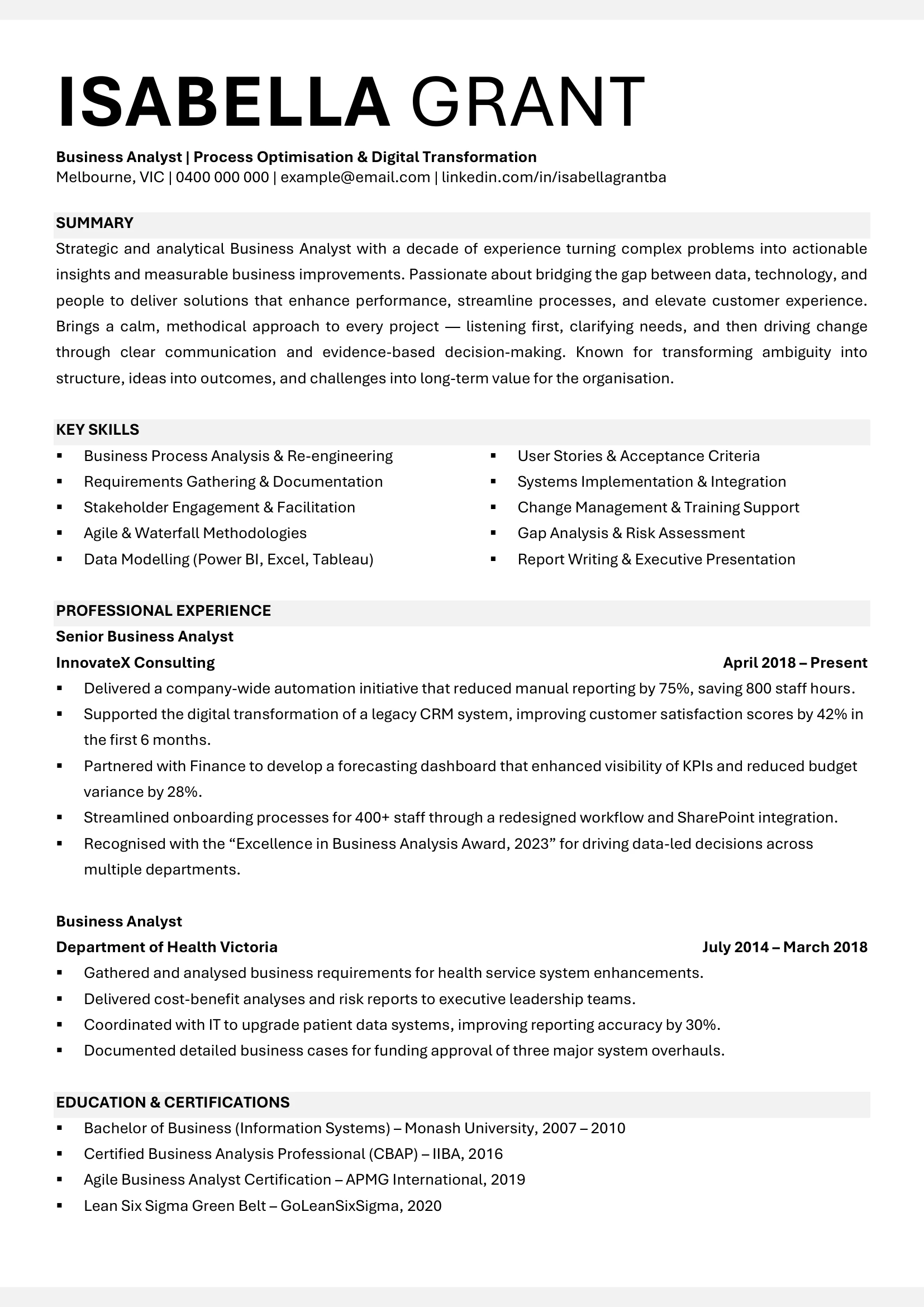
Business Analyst Resume Template
Connect analysis, stakeholder insights and delivery outcomes with precision.
View template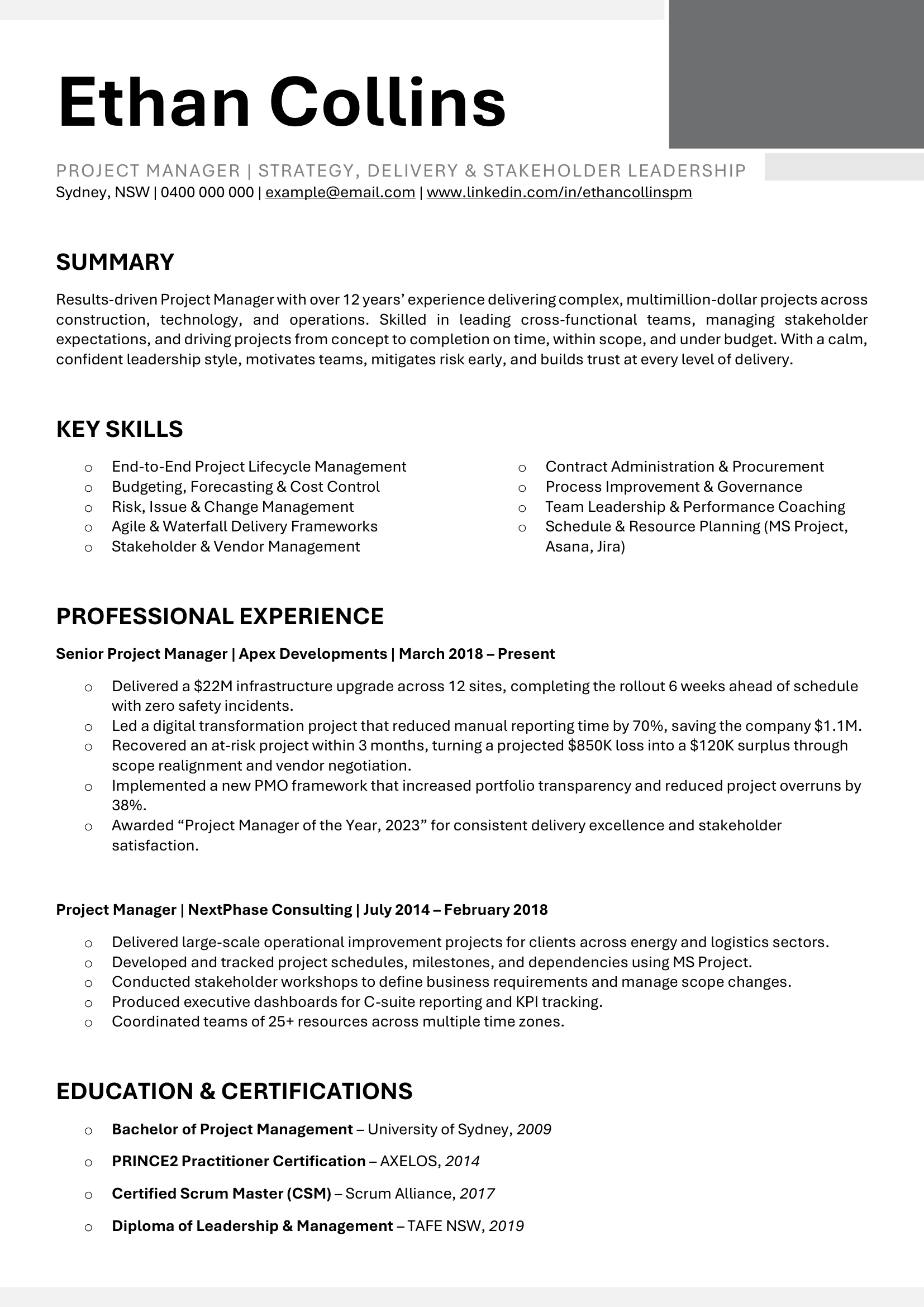
Project Manager Resume Template
Show stakeholders, budgets and delivery metrics in a crisp professional layout.
View template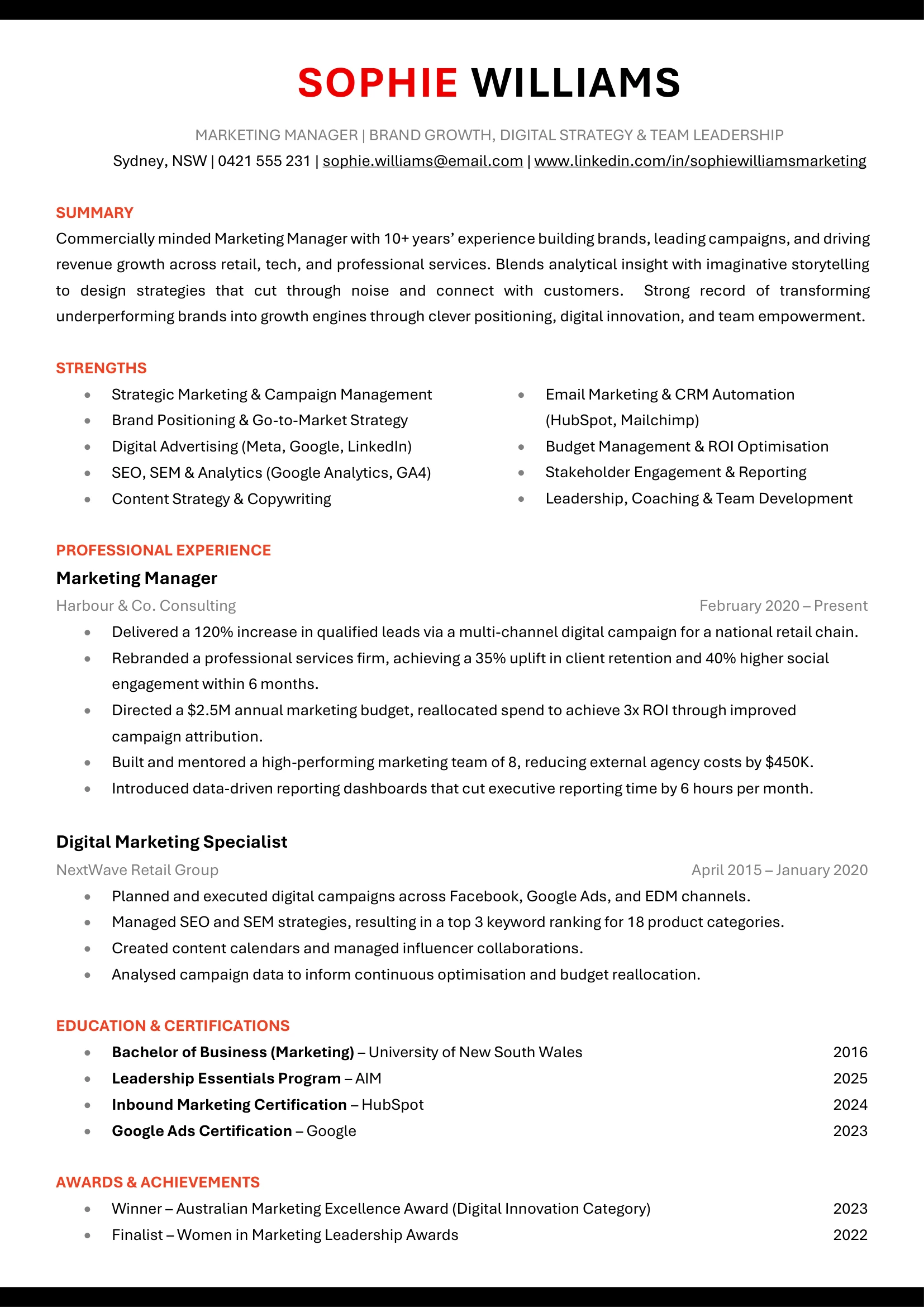
Marketing Manager Resume Template
Quantify multi-channel campaign performance, leadership and growth outcomes.
View template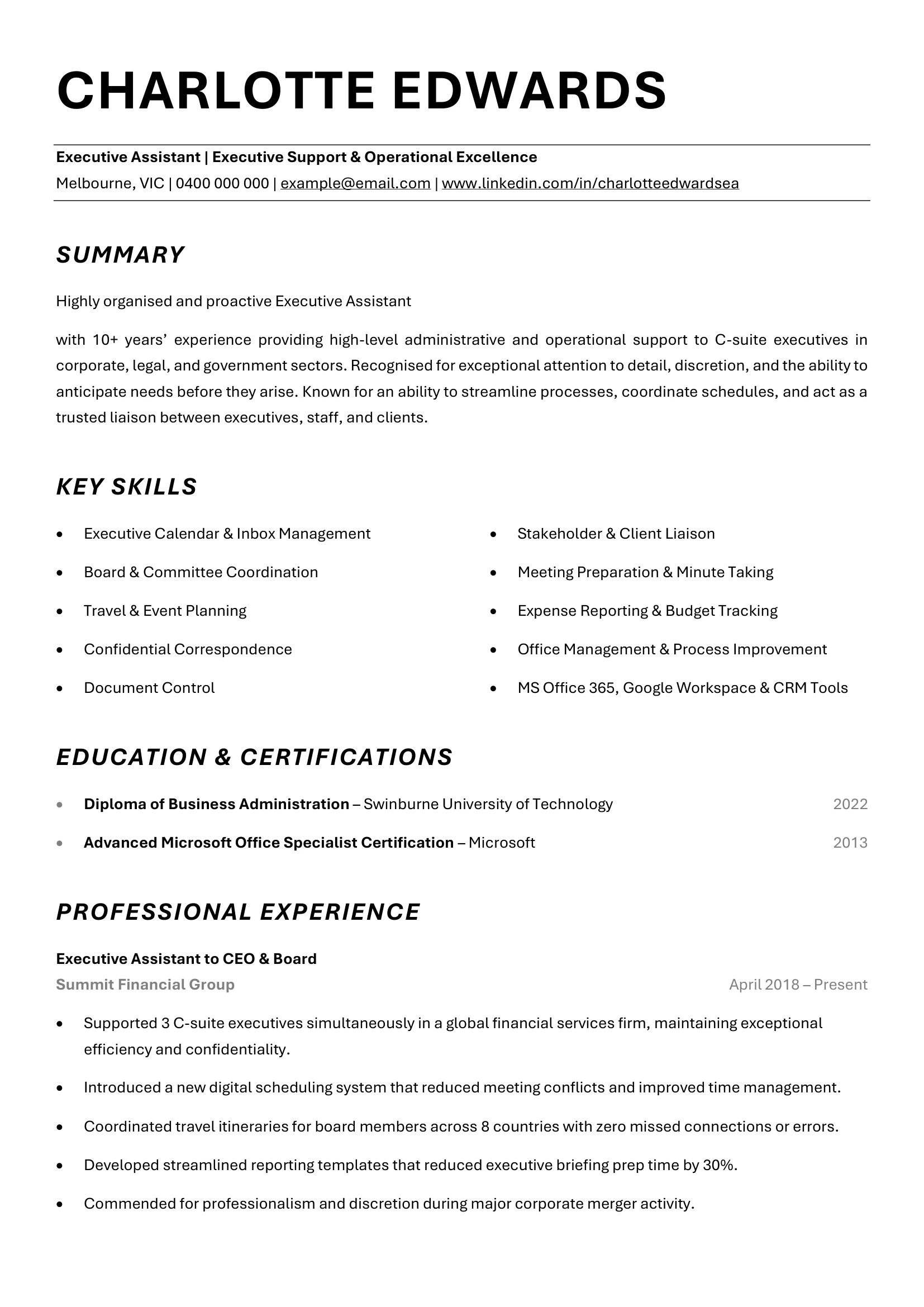
Executive Assistant Resume Template
Demonstrate organisational mastery, stakeholder influence and executive support outcomes.
View templateFAQs: Job Search Interview Follow Up
1) Should I always send a thank-you email after an interview?
Yes. In most cases, a thank-you email within 24 hours is a simple way to show professionalism and reinforce interest.
2) What if I don’t have the interviewer’s email address?
You can reply to the email that scheduled the interview (often HR or a coordinator) and ask them to pass your note along.
3) How many times can I follow up?
A good rule is: one thank-you email, then one check-in if you haven’t heard back after the expected timeline. If there’s still no reply, move on and keep applying.
4) Can I follow up by phone or LinkedIn?
Yes, but email is usually safest. LinkedIn can be okay if you already connected, and phone calls are best only if the employer suggested it.
5) What if they said “we’ll be in touch” but didn’t give a date?
Wait 3–5 business days, then send a short follow up asking about the timeline and next steps.
6) Should I follow up after a rejection?
Yes, if you do it respectfully. Thank them and ask for feedback. Even a small tip can help you improve for next time.
Final Thoughts
A job search interview follow up doesn’t need to be long or complicated. A short message that is polite, timely, and personal can make a big difference. Send your thank-you note, follow up once if needed, and keep moving forward with your applications.
Want to apply faster (and with less stress)?
Choose an ATS-friendly template, tailor the prompts, and send applications with confidence.
Browse ATS-friendly resume templates


